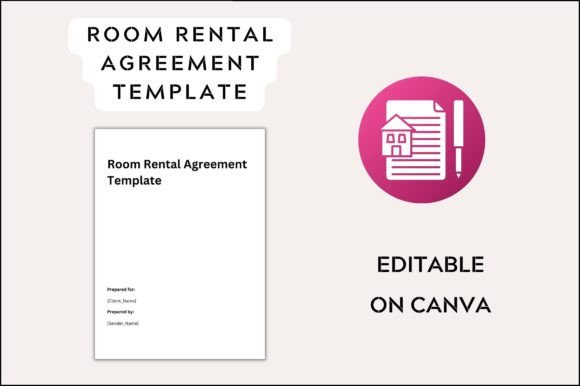
Room Rental Contract: A Designer's Take on Practical Use
As someone who spends most of their days digitizing, stitching, and critiquing machine embroidery design files for real-world application, I approach every new asset with a critical eye. We often see digital products marketed broadly, but the true test is how they translate from a screen to a physical finished product. Today, I am evaluating the Room Rental Contract. While this item is categorized under Graphic Templates and Graphics as a printable PDF agreement, my focus is on how a creative entrepreneur might adapt its visual language for tangible goods or use it as a foundational asset in a broader service offering.
The Visual Personality and First Impressions
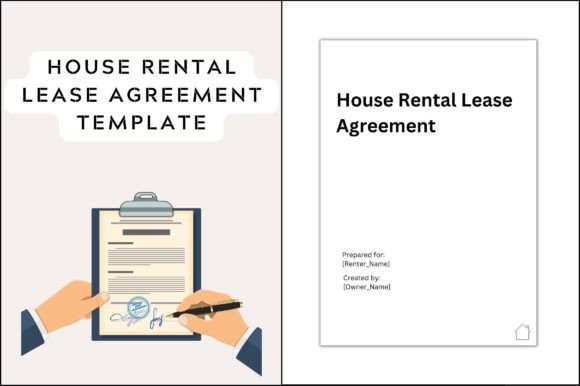
Upon opening the Room Rental Contract template, the immediate impression is one of structured professionalism. The layout is clean, prioritizing readability and clarity over ornate decoration. For an embroidery designer, this minimalist aesthetic presents a unique challenge and opportunity. Unlike a floral motif or a whimsical character, a contract template relies on typography and spatial organization. If you are considering adapting elements of this design for a handmade product, such as a branded apron for a property manager or a tote bag for a real estate investor, the "mood" is strictly business-chic.
The visual personality here is authoritative yet accessible. It lacks the heavy fill stitch areas typical of decorative patches, which actually works in its favor if you plan to extract specific icons or header styles for embroidery. The simplicity suggests that if this were translated into thread, it would require precise running stitch work for borders and careful font selection to maintain legibility. It feels like a tool designed for efficiency, which translates well to products meant for daily professional use.
Real-World Application Scenarios
Let's move beyond theory and imagine a concrete scenario. Suppose you run a small shop product line catering to landlords and property management startups. You decide to create a welcome kit. Instead of just handing over a paper document, you include a high-quality canvas tote bag design featuring a stylized version of the contract's header or a "Key Handover" badge inspired by the template's formal tone.
In this context, the Room Rental Contract serves as the thematic anchor. You aren't embroidering the entire legal text—that would be impractical and unreadable. Instead, you are using the graphic's clean lines to inform a custom patch or a pocket emblem on a work shirt. Imagine a sweatshirt embroidery project for a maintenance team, where the logo derived from this template sits cleanly on the chest. The stark, professional look of the original graphic ensures that the resulting custom apparel looks uniform and trustworthy, reinforcing the brand consistency of the client.
For Etsy seller accounts focusing on organizational tools, this template could be paired with embroidered labels sewn into fabric binders or file folders. The connection between the digital design assets and the physical textile element creates a cohesive package that feels premium. It elevates a standard transaction into a curated experience, which is exactly what buyers in the boutique branding space are looking for.
Navigating Technical Challenges in Stitching
While the concept is strong, translating a document-style graphic into thread requires caution. If you attempt to incorporate text from the Room Rental Contract into an embroidery project, you must be wary of tiny lettering. Small fonts that look crisp on a PDF often turn into indistinguishable blobs when stitched, especially on textured fabrics.
You need to consider your hoop size carefully. A large statement piece on a tote bag allows for more detail, but if you are aiming for a subtle mark on a cap or a collar tag, the complexity must be reduced. Stitch density becomes a major factor; too many overlapping stitches in an attempt to mimic the bold lines of a printed contract can cause the fabric to pucker or the thread to break.
Furthermore, think about the substrate. A contract implies durability and seriousness. Stitching this onto a flimsy, stretchy fabric might undermine that message. Heavyweight cotton, canvas, or twill are better choices. If you are working on dark fabric, ensure your thread colors offer high contrast. A white or silver satin stitch border against navy blue conveys authority, whereas low-contrast threading makes the design look muddy and unprofessional.
Impact on Brand Value and Customer Trust
Why go through the trouble of adapting a printable template into an embroidered asset? It comes down to perceived value. When a client receives a personalized gift or a business tool that features coordinated physical and digital elements, it signals attention to detail. Using the Room Rental Contract as part of a larger branding suite shows that you understand the client's need for reliability.
For craft business owners, this differentiation is key. Anyone can sell a printed form. Fewer can offer a complete "Landlord Starter Pack" that includes the digital agreement plus a professionally embroidered key holder or desk organizer. This approach boosts buyer engagement because it solves multiple problems at once: legal protection and professional presentation. It builds trust because the physical quality of the embroidery reflects the quality of the service or product being offered.
Practical Notes for the Embroidery Designer
Before committing to a production run based on this graphic, there are several steps you should take to ensure success. First, always test the design on scrap fabric that matches your final material. What looks good on the screen might behave differently on thick canvas versus a poly-cotton blend.
- Check thread color contrast: Ensure your chosen palette maintains the严肃 (serious) tone of a legal document without becoming dull.
- Review stitch density: Simplify complex areas. If the graphic has fine lines, consider converting them to a single run of running stitch rather than a dense fill.
- Confirm hoop size: Make sure your machine can accommodate the dimensions required for the text or icons you wish to extract.
- Inspect small details: Zoom in on your digitized version. Are the corners sharp? Is the spacing between letters sufficient to prevent thread bridging?
- Test in black and white: Sometimes seeing the design without color helps you judge the structural integrity of the stitch pattern.
- Use proper stabilizer: For documents or text-heavy designs, a cut-away stabilizer often provides the necessary support to keep lines straight.
Finally, and perhaps most importantly, verify the licensing terms. Since the Room Rental Contract is sold as a digital download for printing, using its visual elements for commercial embroidery may require specific permission. Do not assume that purchasing the PDF grants you the right to sell embroidered derivatives. Always check the license before selling finished products or using the designs in commercial embroidery projects for clients.
In conclusion, while the Room Rental Contract is fundamentally a Graphic Template, its clean, professional aesthetic offers fertile ground for creative adaptation. With careful digitization and a strategic approach to materials, it can become a standout element in a suite of professional goods, bridging the gap between digital utility and tactile quality.