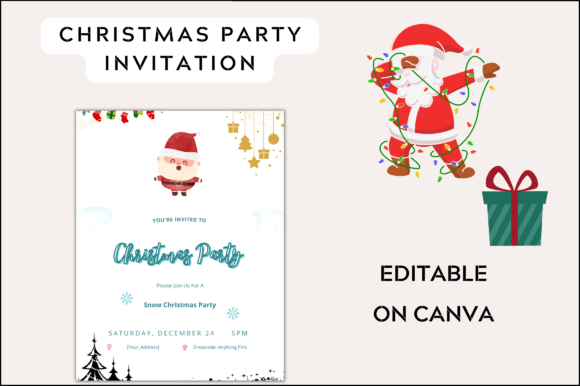
Merry Christmas Invitation Printable: A Designer's Review
As a designer who spends more time staring at stitch simulations than most people spend watching television, I approach every new Graphic Templates download with a healthy dose of skepticism. We have all been there: you buy a beautiful digital file, load it onto your machine, and realize too late that the details are too fine for the fabric or the density is going to turn your soft cotton into a cardboard coaster. That is why I took a close look at the Merry Christmas Invitation Printable before committing it to a client project. This isn't just about whether it looks good on a screen; it is about how it performs as a machine embroidery design in the real world.
My first impression of this template was its versatility. While the product listing categorizes it under Graphics and printable invitations, my mind immediately went to how these vector-like shapes would translate into thread. The layout suggests a classic holiday mood—warm, inviting, and slightly nostalgic. For an embroidery project, this visual personality is gold. It avoids the overly trendy elements that date quickly, making it a safe bet for small shop products intended to be kept for years. The shape and theme feel natural for holiday embroidery, specifically for items that need to convey a personal touch without screaming "mass-produced."
Real-World Application: The Holiday Tote Bag Test
To truly evaluate this design, I envisioned a specific real-life scenario: creating a limited run of custom tote bags for a local boutique's holiday gift-with-purchase promotion. The goal was to take the essence of the Merry Christmas Invitation Printable and adapt it for sweatshirt embroidery and heavy canvas bags. In this context, the design shines because of its clear structure. When you are working with a tote bag design, you need bold lines that read well from a distance but still hold up under close inspection.
If I were stitching this onto a textured fabric like a waffle-knit sweatshirt or a woven linen apron, the simplicity of the core shapes would prevent the threads from getting lost in the fabric grain. However, if you are planning to use this for baby embroidery on a delicate onesie, you would need to be cautious. The original printable format might contain fine lines that require adjustment. In a professional setting, I would never run a new file directly on the final garment. I would first test the embroidery file on scrap fabric of the same weight to see how the stitch density behaves. Does it pucker? Does it pull? These are the questions that determine if a design is ready for commercial embroidery.
Navigating Fabric Challenges and Hoop Limitations
One of the critical aspects of using a template like this is understanding where it might struggle. While the Merry Christmas Invitation Printable offers a fantastic base, there are scenarios where you need to proceed with care. For instance, if you are attempting to place this on a curved surface like a cap, the layout might need significant modification to avoid distortion. Caps are unforgiving; what looks flat on a monitor can warp dramatically on a structured front panel.
Similarly, consider the issue of thread colors and contrast. A printable design often relies on color gradients or subtle shading that does not exist in thread. You will need to make executive decisions on whether to use a satin stitch for smooth borders or a fill stitch for solid areas. If the design includes tiny lettering or intricate corners, verify that your machine can handle the resolution. On dark fabrics, you might need to add an underlay or choose a brighter thread palette to ensure the design pops. Ignoring these factors can lead to a finished product that looks muddy or indistinct, hurting your brand consistency.
Another practical consideration is the hoop size. Depending on how you scale the invitation motif, it might exceed the capacity of a standard 4x4 hoop, requiring a jump to a 5x7 or larger frame. Always check the dimensions before hooping your expensive velvet or leather. If the design is too large for your available hoops, you might have to split the design, which introduces alignment risks that can ruin the visual appeal of the piece.
Elevating Product Value and Customer Trust
Why does any of this matter? Because the quality of your embroidery project directly impacts customer trust. When a buyer receives a personalized gift or a piece of custom apparel, they are judging your entire business based on that single item. A clean, well-executed stitch job tells them you care about quality. Conversely, a design that was clearly not vetted for embroidery can look amateurish.
Using the Merry Christmas Invitation Printable thoughtfully can enhance the perceived value of your handmade products. Whether it is an embroidered patch sewn onto a denim jacket or a direct stitch on a kitchen towel, the clarity of the design communicates professionalism. For Etsy sellers and creative entrepreneurs, this distinction is vital. In a crowded marketplace, the difference between a generic item and a premium handmade product often lies in the technical execution of the design assets.
Furthermore, this template serves as an excellent foundation for creating printable mockup images for your online store. Even before you stitch a single thread, you can use the graphic to visualize how the final item will look on different backgrounds. This helps in marketing your holiday gifts and generating buyer engagement before the inventory is even made.
Final Verdict and Designer Notes
In conclusion, the Merry Christmas Invitation Printable is a strong contender for holiday projects, provided it is treated with the respect a professional designer affords their tools. It is not merely a picture to be printed; it is a blueprint for creation. Before you list this as a digital product or sell finished items, you must do your homework.
- Test First: Always stitch out on scrap fabric similar to your final material to check for puckering or registration issues.
- Check Licensing: Verify the terms regarding commercial use. Can you sell the stitched item? Can you resell the digital file? Never assume.
- Adjust Density: If the design feels too heavy, reduce the fill density to keep the fabric soft, especially for wearables.
- Stabilizer Matters: Match your stabilizer to the fabric texture. Cut-away for stretchy knits, tear-away for stable wovens.
- Color Contrast: Ensure your thread choices provide enough contrast against the garment color for readability.
There is no mention of specific stitch counts or guaranteed machine compatibility in the basic description, so it is your responsibility to inspect the file formats upon download. If you are an applique design enthusiast, you might even consider adapting sections of this graphic into an applique project to add texture and dimension. Ultimately, this design has the potential to be a star in your holiday collection, from nursery decor to boutique branding, as long as you bridge the gap between a digital graphic and a tactile, stitched reality with skill and attention to detail.