Landlord and Tenant Contract: Premium Graphics for Templates
As a digital publisher who has spent years curating visual assets for high-traffic blogs and editorial sites, I approach every new graphic design asset with a critical eye. It is not enough for an image to simply look good; it must perform. It needs to hold up under the scrutiny of a mobile user scrolling quickly, support the hierarchy of a long-form article, and reinforce the brand identity of the site hosting it. Recently, I reviewed the Landlord and Tenant Contract template, a digital download designed for residential agreements, to see how it fits into a modern content publishing workflow. My goal was to determine if this asset could serve as more than just a legal form—could it be a cornerstone for editorial design and content marketing in the real estate and property management niche?
First Impressions and Editorial Mood
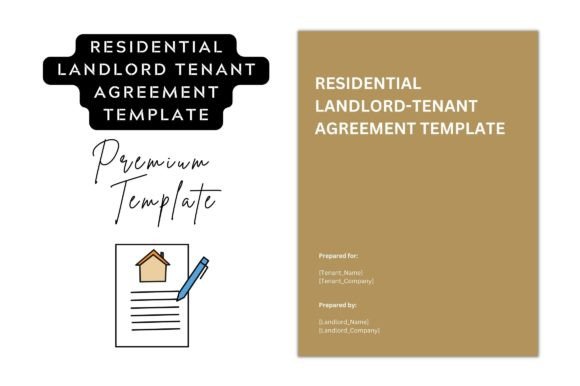
Upon opening the Landlord and Tenant Contract, the immediate impression is one of structured professionalism mixed with approachable clarity. Unlike many sterile legal documents that feel intimidating, this template utilizes a clean layout that suggests transparency and trust. For a blogger or website owner covering topics like rental property management, tenant rights, or real estate investing, the visual mood is perfect. It strikes a balance between modern design and traditional authority. The typography is legible, the spacing is generous, and the overall aesthetic feels "lifestyle-professional"—a term I use to describe assets that feel serious enough for business but polished enough for a consumer-facing blog.
This specific style supports content niches that need to establish immediate credibility. If you are running an educational site for first-time landlords or a newsletter for property investors, the visual language of this document tells your reader that your advice is grounded in proper procedure. It avoids being overly decorative or playful, which is crucial when dealing with legal matters, yet it avoids the dry, corporate stiffness that often alienates small business owners and creative entrepreneurs.
Integrating into Real Publishing Workflows
The true value of a digital product like this lies in its versatility beyond its primary function. While the core utility is obviously as a printable agreement, my review focused on how this asset can be repurposed across a content ecosystem. Here is how I envision deploying this within a real publishing strategy:
- Lead Magnets and Content Upgrades: This is the most obvious and high-value use case. By offering the Landlord and Tenant Contract as a free digital download in exchange for an email address, bloggers can significantly boost their list growth. It serves as a high-perceived-value lead magnet for anyone entering the rental market.
- Pinterest Pins and Social Media Graphics: The clean lines and professional structure of the template make for excellent featured images. You can overlay bold headlines like "Free Rental Agreement Template" or "Protect Your Property Today" on top of the document preview to create clickable Pinterest pins that drive traffic to your affiliate posts or service pages.
- Digital Guides and eBooks: For creators compiling comprehensive resources on property management, this contract can be included as a chapter or an appendix. It adds tangible value to a paid digital guide, making the product feel more complete and actionable.
- Website Headers and Banners: A cropped section of the contract's header can serve as a subtle background texture for a website banner, reinforcing the theme of organization and legal compliance without distracting from the main navigation.
- Affiliate Marketing Visuals: If you are promoting property management software or legal services, using this template as a visual anchor in your review posts helps contextualize the affiliate offer. It shows readers exactly what kind of documentation they need before introducing the tool that helps manage it.
Impact on Content Performance and Brand Identity
In the crowded space of online publishing, visual hierarchy is everything. Using a premium template like the Landlord and Tenant Contract elevates the perceived quality of your entire site. When a reader sees a polished, well-designed document associated with your brand, it triggers a psychological response of trust. They assume that if you pay attention to the details of your graphics and resources, you likely pay attention to the accuracy of your content as well.
This asset supports stronger brand identity by providing a consistent visual standard. Instead of cobbling together mismatched forms from various free sources, you have a cohesive look that can be branded with your logo and colors. This consistency helps with category recognition; over time, your audience will associate that specific clean, professional look with your expert advice. Furthermore, in terms of click-through potential, high-quality visuals stop the scroll. A generic text link to a contract is far less compelling than a beautifully rendered graphic showing the template itself.
Strategic Placement and Usage Constraints
While this graphic design asset is robust, it is not a one-size-fits-all solution for every pixel on your site. It works best as a hero image on a landing page, a thumbnail for a tutorial video, or a dedicated section in a newsletter. It shines when given space to breathe, allowing the reader to appreciate the layout and readability of the text within the contract.
However, caution is required in specific scenarios. On small mobile thumbnails, the fine print of the contract may become illegible, so ensure you crop to the header or title area for those placements. Avoid using it on low-contrast backgrounds where the white paper effect might get lost. Additionally, while the design is professional, it may feel too formal for very casual, lifestyle-focused blog posts that rely on hand-drawn illustrations or vibrant, chaotic energy. It is also worth noting that for strictly corporate or enterprise-level legal firms, the "printable for everyone" vibe might feel slightly too accessible; it is best suited for small business branding and individual landlords rather than massive conglomerates.
Practical Notes for Publishers and Designers
Before integrating the Landlord and Tenant Contract into your live environment, there are several technical and strategic steps you should take to ensure optimal performance:
- Test Across Devices: Always preview how the document looks on both desktop and mobile screens. Ensure that the font sizes remain readable when scaled down on a smartphone.
- Check Thumbnail Legibility: Simulate how the image appears in a grid layout or social feed. If the text blurs, create a variation with larger typography for those specific use cases.
- Typography Pairing: Experiment with pairing the template's fonts against your site's existing typeface. Try it beside serif fonts for a classic look, sans serif for modernity, or even script fonts for a personalized touch in your marketing materials.
- File Optimization: Review the file size. For web performance, you may need to compress images properly without losing the crispness of the text, especially if using screenshots of the template as blog graphics.
- Licensing Verification: Crucially, confirm the commercial license terms. Since this is intended for monetized websites, affiliate pages, or paid content products, you must ensure you have the right to redistribute or use the asset commercially. Most premium templates on creative marketplaces allow this, but always read the fine print.
- Contrast Testing: Try viewing the asset in black and white to ensure the visual hierarchy holds up even without color cues. This is vital for accessibility and for users who print the document in grayscale.
In conclusion, the Landlord and Tenant Contract is more than just a legal form; it is a versatile creative design tool for the savvy publisher. Whether you are building a Canva template kit for real estate agents, creating a printable design resource for your shop, or simply needing a trustworthy visual for your next blog post, this asset delivers. It bridges the gap between functional necessity and aesthetic appeal, making it a valuable addition to any digital publisher's library of design assets.