Real Estate Email Signature Templates: Premium Graphics
As a digital publisher who spends countless hours curating the visual identity of various content platforms, I approach every new graphic design asset with a critical eye. It is not enough for a design to simply look good in isolation; it must perform within the chaotic ecosystem of a live website, a crowded inbox, and a fast-scrolling social feed. When I first encountered the Real Estate Email Signature Templates, my initial impression was one of refined professionalism mixed with modern approachability. This is a Graphic Templates collection that immediately establishes an editorial mood of trust and authority, which is precisely what is required in the high-stakes world of property transactions.
The aesthetic here is undeniably clean and structured, avoiding the clutter that often plagues amateur designs. It feels less like a decorative afterthought and more like a strategic branding tool. For bloggers, affiliate marketers, and small business owners, this kind of visual clarity is essential. The templates strike a balance between being lifestyle-focused—evoking the dream of home ownership—and strictly professional, ensuring that the agent or broker appears competent and reliable. This duality makes the asset incredibly versatile for anyone looking to elevate their brand identity without hiring a dedicated designer.
Integrating Professional Signatures into a Publishing Workflow
While the primary function of these templates is obvious, as a publisher, I always look for ways to leverage design assets across multiple touchpoints. The Real Estate Email Signature Templates are editable in Canva, which opens up a world of possibilities beyond just the footer of an email. In a real publishing workflow, consistency is key. I can envision using the typographic styles and layout structures from these signatures to create cohesive blog graphics and article headers. If your email signature uses a specific font pairing and color palette, mirroring those elements in your newsletter banners or downloadable resources creates a seamless user experience.
Consider the workflow of a content creator launching a new digital guide or lead magnet for real estate investors. The visual language established by these signatures can be extended to the cover art of the eBook, the thumbnails for tutorial videos, and even the Pinterest pin designs used to drive traffic. Because the source files are flexible, you can adapt the "professional real estate agent" look to fit various formats. Whether you are designing a media kit for potential sponsors or creating social media graphics to announce a new listing, having a unified visual system strengthens reader trust and improves category recognition.
Enhancing Visual Hierarchy and Click-Through Potential
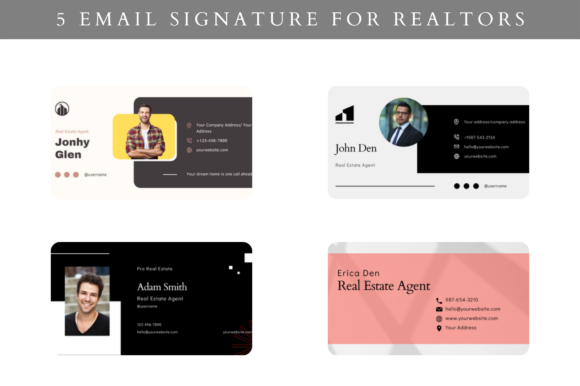
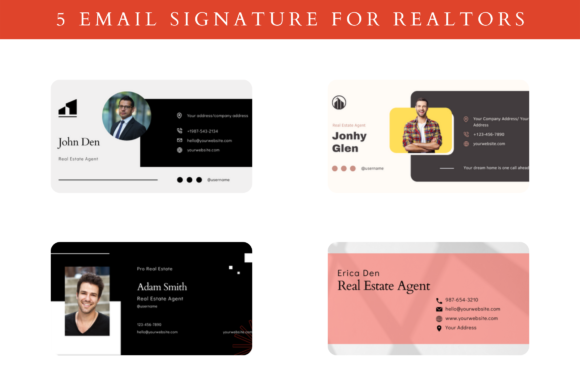
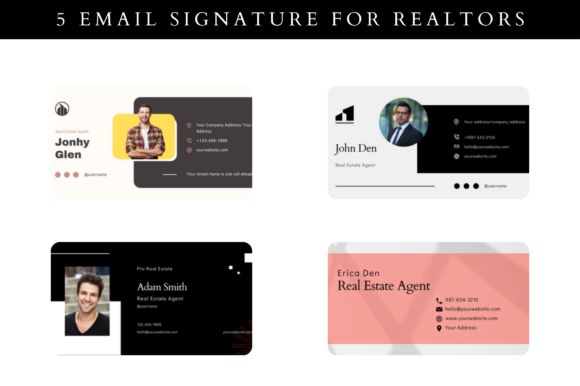
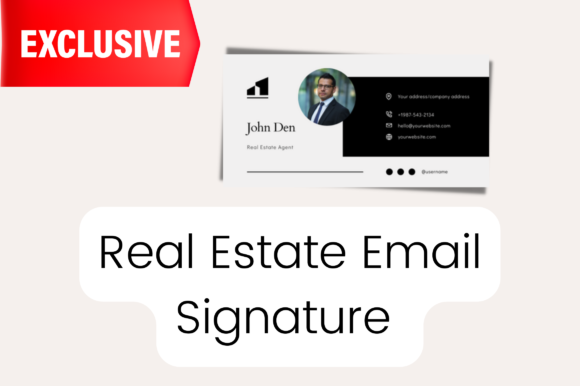
The core value of any commercial design asset lies in its ability to guide the viewer's eye. These templates excel at creating a strong visual hierarchy. By strategically placing headshots, contact information, and call-to-action buttons, they ensure that the most critical data points are seen first. For a digital marketer, this translates directly to better click-through potential. When a recipient opens an email or views a blog post, a polished signature acts as a final stamp of quality, reinforcing the message delivered in the body content.
In the context of content marketing and affiliate marketing, trust is the currency of conversion. A sloppy or generic signature can undermine a well-written sales pitch. Conversely, a premium signature suggests that the sender pays attention to detail—a trait highly valued in real estate. Using these Graphics helps signal to the audience that the content they are consuming is premium, reliable, and worth their time. This psychological cue is subtle but powerful, often making the difference between a ignored link and a clicked conversion.
Ideal Use Cases and Strategic Placement
To get the maximum return on this digital download, it is important to deploy it where it will have the most impact. These templates work best as hero images for agent profile pages, as consistent footers in weekly newsletters, and as the closing visual on proposal documents. They are also excellent for creating standardized website header elements that match the tone of the agent's personal brand. If you are running a niche blog about property investment, using these signature styles in your "About the Author" boxes can significantly boost credibility.
Furthermore, these assets are perfect for creating printable design elements like business cards or open house flyers, provided the resolution settings in Canva are adjusted correctly. The modular nature of the templates allows you to swap out headshots and logos easily, making them ideal for teams or agencies that need to onboard new agents quickly while maintaining a unified corporate look.
Cautionary Notes for Complex Layouts
However, no design asset is without its limitations, and careful consideration is needed when applying these templates to certain environments. While they shine in standard email clients and desktop views, one must be cautious when viewing them on small mobile thumbnails where intricate details might get lost. Additionally, if your website or blog already employs a very busy, text-heavy layout, adding a complex signature graphic could contribute to visual noise.
These templates lean towards a specific aesthetic that may not suit every niche. For instance, if you are writing for a ultra-minimalist architectural firm or a stark corporate entity that demands a purely textual approach, the decorative elements in these templates might feel too "marketing-heavy." It is crucial to assess whether the "lifestyle" vibe aligns with your specific brand voice before committing to it across all channels.
Practical Publisher Notes for Implementation
Before integrating the Real Estate Email Signature Templates into your live projects, there are several technical checks you should perform. First, always test the final output on both desktop and mobile screens. Email clients render HTML differently, and what looks perfect in Gmail might break in Outlook. Second, check how the design looks when stripped of color; ensure that the contrast remains high enough for readability in black and white or grayscale modes.
When pairing these graphics with your existing content, experiment with different typography. Try placing the signature beside serif fonts for a traditional feel, or sans serif fonts for a modern look. Ensure that the file sizes are optimized for web performance; large images can slow down page load times, negatively affecting SEO. Finally, and perhaps most importantly, confirm the commercial license terms. Since these are intended for small business branding and monetized websites, you must ensure you have the right to use them in affiliate marketing campaigns and paid content products. Always review the licensing agreement from the creative marketplace where you acquired the asset to avoid any legal pitfalls down the road.
In conclusion, the Real Estate Email Signature Templates offer a robust foundation for building a trustworthy and visually appealing online presence. For the experienced publisher, they represent more than just a pretty footer; they are a versatile tool for enhancing editorial design, strengthening web design consistency, and ultimately driving better engagement through superior visual communication.