Free Expense Tracker: A Designer's Take on Practical Utility
As someone who spends most of my days hooped up at the machine, I approach every new machine embroidery design with a mix of curiosity and skepticism. We see thousands of files floating around the internet, especially in the Freebies and Graphics categories, but not all of them translate well from a screen to a stitched finished product. When I first encountered the Free Expense Tracker, my initial reaction was grounded in its utility rather than its flashiness. This isn't a whimsical floral motif or a trendy typography piece; it is a functional tool. However, in the world of custom apparel and handmade goods, functionality often drives sales just as much as aesthetics do.
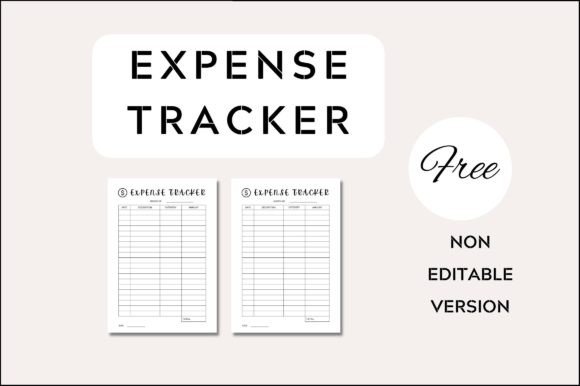
The visual personality of the Free Expense Tracker is clean, structured, and undeniably professional. Upon opening the file, the layout feels intuitive, designed for clarity above all else. For an embroidery designer, this suggests a project that relies heavily on precision. The lines appear crisp, likely utilizing a combination of running stitch for grid lines and perhaps a light fill stitch for headers or specific data fields. There is a certain mood of organization it creates immediately. It doesn't scream for attention; instead, it whispers reliability. This makes it an excellent candidate for projects where the end-user needs to feel a sense of control and order.
Real-World Application: The Custom Tote Bag Scenario
To truly evaluate this design, I imagined a specific real-life scenario that many of us face: a client request for a set of personalized organizational tools for a small business owner. Picture a boutique coffee shop owner who wants branded merchandise for their staff to track daily cash drawers or inventory costs. Here, the Free Expense Tracker shines. Instead of printing paper sheets that get coffee-stained and lost, imagine this design embroidered directly onto a heavy canvas tote bag design or a durable apron.
In this context, the embroidery serves a dual purpose. It acts as branding for the shop while providing a reusable, washable tool for the employee. The structured nature of the tracker fits perfectly on the flat surface of a tote bag. If executed with high-contrast thread colors—perhaps white or silver thread on a navy or black bag—the grid lines become highly visible, allowing the user to write in expenses with a fabric marker or chalk pen. This transforms a simple digital embroidery file into a dynamic, interactive handmade product. Customers love items that solve problems, and embedding a functional tracker into a gift or product adds immense perceived value.
Versatility Across Products and Fabrics
Beyond tote bags, the versatility of this design extends to various custom apparel and home goods. For sweatshirt embroidery, this could be a subtle chest pocket detail on a freelancer's hoodie, a playful nod to their "CEO" status. For baby embroidery, parents often look for ways to track feeding schedules or diaper changes; a simplified version of this tracker on a burp cloth or nursery wall hanging could be a thoughtful, practical personalized gift.
However, we must discuss where caution is required. Embroidery on textured or stretchy fabrics demands careful planning. If you attempt to stitch this on a thin, stretchy t-shirt, the density of the grid lines could cause puckering if the stitch density is too high or if the wrong stabilizer is used. A cut-away stabilizer would be essential here to maintain the structural integrity of the grid over time. Similarly, on curved surfaces like caps, the straight lines of an expense tracker can become distorted if not digitized or hooped perfectly. The human eye is very good at spotting a wobbly line, and nothing kills professionalism faster than a warped grid.
Dark fabrics present another challenge. If the design relies on fine running stitches for the lines, they might get lost against a black background unless you choose a thread with enough sheen or brightness. Conversely, on light fabrics, ensure the thread isn't so dark that it looks like a stain from a distance. Testing the design on scrap fabric of the same weight and texture as your final material is non-negotiable. This allows you to check the registration of the lines and ensure that tiny details, like column headers, remain legible after stitching.
Elevating Brand Consistency and Customer Trust
For Etsy sellers and owners of a small shop product line, consistency is key. Using a design like the Free Expense Tracker across a range of products—from kitchen towels to planner covers—creates a cohesive brand identity. It signals to your customers that you pay attention to details and understand their lifestyle needs. When a customer receives a holiday gift or wedding present that includes a beautifully embroidered tracker, it enhances the giftability of the item. It moves the product from being merely decorative to being indispensable.
The visual appeal of this design lies in its simplicity. In a market saturated with overly complex applique design works and dense satin stitch logos, a clean, linear tracker stands out for its minimalism. It suggests a modern, organized aesthetic that appeals to creative entrepreneurs and hobbyists alike. Furthermore, because it is a Freebie, it lowers the barrier to entry for testing new product ideas. You can experiment with different thread colors and fabric combinations without a significant financial investment, allowing you to refine your printable mockup strategies and actual stitching techniques before launching a full collection.
Practical Notes for the Professional Stitcher
Before committing this design to a client's project, there are several technical aspects to verify. Since the product description highlights that it is an "Editable Expense Tracker Template," it implies a level of customization, but as an embroiderer, you need to confirm the specifics of the embroidery file itself. Does the download include multiple hoop sizes? If you are working on a small cap or a child's garment, you need to ensure the design scales down without losing the definition of the grid lines. Tiny lettering or extremely fine details can turn into a blob of thread if reduced too much.
Always review the licensing terms carefully. Just because a graphic is free to download for printing does not automatically grant rights for commercial embroidery use. If you plan to sell finished items featuring this design on Etsy or at craft fairs, you must confirm that the license permits commercial embroidery. Additionally, check the stitch count and density recommendations. High-density areas may require a topping if you are stitching on looped towels or fuzzy fleece to prevent the stitches from sinking into the fabric texture.
Finally, consider the end-user experience. If this is intended to be written on, test the interaction between the embroidery threads and fabric markers. Some threads repel ink, while others absorb it, potentially ruining the look of the design after the first use. A quick test run can save you from a dissatisfied customer later.
In conclusion, the Free Expense Tracker is more than just a digital download; it is a versatile asset for the thoughtful designer. Whether used for holiday embroidery gifts, boutique branding, or personal organization, its value lies in its practical application. By paying attention to fabric choice, stabilizer selection, and licensing details, you can transform this simple graphic into a high-value, professional product that resonates with customers looking for both style and substance in their handmade goods.