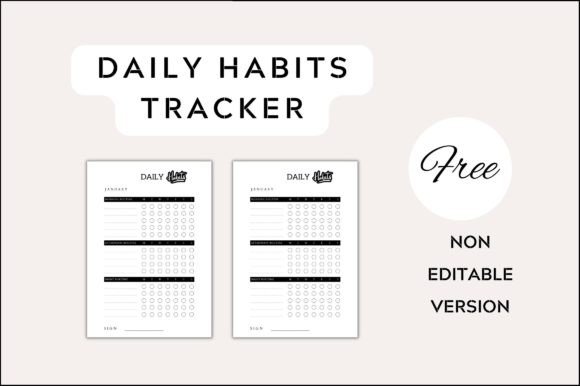
Daily Habits Tracker Graphics for Freebies
As a brand designer who spends most of my days refining logos and selecting paper stocks for local businesses, I approach free digital assets with a healthy dose of skepticism. Often, "free" translates to generic or low-resolution files that dilute a brand's identity rather than enhance it. However, upon reviewing the Daily Habits Tracker, I found a surprising level of utility that extends far beyond personal organization. While originally categorized under Freebies and intended as a self-help tool, this graphic design asset holds significant potential for small business branding, particularly for handmade sellers, boutique owners, and local food entrepreneurs looking to add value to their customer experience.
First Impressions: A Mood of Structured Wellness
The immediate visual impression of the Daily Habits Tracker is one of clarity and approachable structure. The layout suggests a brand personality that is organized, mindful, and supportive. It does not scream "luxury" in the traditional sense of gold foil and heavy serif typography; instead, it exudes a modern, clean aesthetic that fits perfectly with the current trends in wellness, organic skincare, and artisanal food sectors. For a local business owner, this mood is invaluable. It signals to the customer that the brand cares about balance, consistency, and improvement. Whether you are running a yoga studio, a health-food cafe, or a sustainable candle shop, this asset aligns naturally with a narrative of daily betterment and conscious living.
Strategic Applications in Local Business Branding
While the primary function of this template is habit tracking, its application in small business branding is versatile. In a real-world scenario, imagine a local coffee shop launching a "30-Day Mindful Morning" campaign. Instead of a standard flyer, they could customize this tracker as a loyalty card or a printable insert included with every bag of beans. This transforms a simple transaction into an engaging brand interaction.
For product sellers, specifically those in the handmade soap or skincare niche, this graphic design asset can be repurposed as a "Self-Care Challenge" card tucked inside product packaging. It serves as a tangible touchpoint that encourages repeat usage of the product. Furthermore, the clean lines and editable nature of the template make it suitable for:
- Social Media Graphics: Breaking the tracker down into weekly segments for Instagram Stories to drive engagement.
- Email Marketing: Using the layout as a visual header for newsletters focused on productivity or wellness.
- Printable Design: Offering it as a lead magnet on a website to build an email list.
- In-Store Signage: Printing large-format versions for community boards in boutiques or cafes.
Elevating Product Presentation and Customer Trust
In the crowded marketplace of local goods, professional branding is the differentiator. Including a high-quality, well-designed tracker in your package elevates the perceived value of the entire purchase. It moves the interaction from a simple exchange of goods to a curated experience. When a customer receives a beautifully designed tracker alongside their purchase, it reinforces brand identity and fosters trust. It shows attention to detail—a crucial element for product label credibility and overall shelf appeal.
This asset supports stronger visual hierarchy by providing a clear framework for information. For a food business, this could be adapted into a "Flavor Journey" log, guiding customers to try different products over a month. The consistency offered by such tools helps in building a recognizable brand language, making marketing visuals more cohesive and polished.
Ideal Use Cases for Maximum Impact
The Daily Habits Tracker shines brightest when used as a supportive element rather than the main event. It works exceptionally well as:
- Packaging Accents: A printed insert that adds depth to the unboxing experience.
- Hero Graphics: A central visual for a blog post or landing page promoting a new service.
- Seasonal Campaign Visuals: Adapting the tracker for "New Year, New You" or "Summer Wellness" challenges.
- Thank-You Cards: Adding a functional twist to the traditional note of gratitude.
For creative entrepreneurs managing their own design assets, this template offers a quick win for content creation without needing to start from scratch. It is particularly effective for brands that rely on community building and customer retention.
Cautionary Notes for Design Implementation
Despite its versatility, there are contexts where this asset should be used carefully. It may not suit formal corporate branding or industries requiring strict minimalism where any decorative element distracts from legal information. On very small product labels, the grid lines and text boxes might become illegible if scaled down too aggressively. Additionally, for luxury minimalist brands, the pre-set structure might feel too rigid or "template-like" if not heavily customized with unique typography and color palettes. Designers must ensure that the decoration does not compete with critical text, such as ingredients or safety warnings.
Practical Designer Notes for Execution
Before integrating the Daily Habits Tracker into a client project or personal business workflow, several practical steps are essential. First, always test the design on real product mockups to see how the lines and text render in print. Check the black and white usage to ensure it remains effective for cost-saving monochrome printing. Preview the asset on small labels to confirm legibility.
Color testing is crucial; ensure the template harmonizes with your existing brand colors. Compare it against competitor packaging to ensure it stands out rather than blends in. If the file format allows, inspect the SVG design or vector editability to adjust line weights and shapes. Experiment with pairing the tracker's layout with different font styles—serif for elegance, sans serif for modernity, or handwritten fonts for a personal touch.
Finally, and most importantly, review the licensing terms. Even though it is listed under Freebies, confirm the commercial license status before using it for client work or physical product sales. Understanding the rights associated with digital products and clipart is vital for avoiding legal pitfalls in commercial design.
In conclusion, the Daily Habits Tracker is more than just a organizational tool; it is a flexible graphic design asset that, when wielded with creative intent, can significantly enhance local business storytelling. By adapting this template for packaging, promotions, and community engagement, brand owners can create deeper connections with their audience while maintaining a professional and cohesive visual identity.