Email Signature Template: A Designer's Stitch Review
As a designer who spends half my life staring at digitized files and the other half wrestling with thread tension, I approach every new Email Signature Template with a specific set of questions. Will this translate from a screen to a stitch? Does it have the structural integrity to survive a wash cycle, or is it just pretty pixels? When I first opened the files for this Real Estate Email Signature Template, my initial reaction wasn't about the fonts or the layout—those are digital concerns. My mind immediately went to the hoop. I was visualizing how these clean lines and professional elements would sit on a textured towel or a structured cap.
This review isn't about whether the template looks good in Canva; it's about whether this Graphics asset holds up when you turn it into a tangible handmade product. For embroidery designers, Etsy sellers, and craft business owners, the gap between a digital preview and a finished embroidered item is where profits are made or lost. Let's dig into how this design performs in the real world.
First Impressions: From Screen to Stabilizer
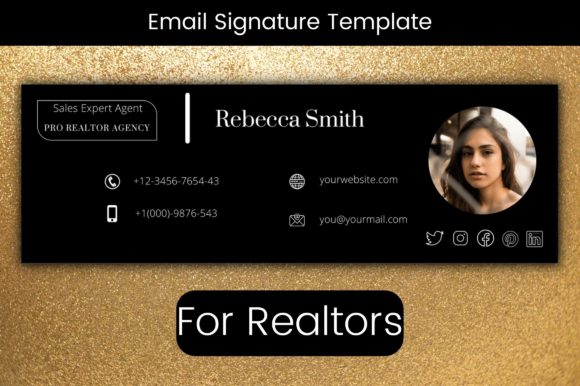
The moment you load this Email Signature Template into your embroidery software, the mood is immediately clear: professional, trustworthy, and streamlined. In the world of real estate branding, clutter is the enemy. This design respects that. The shapes are distinct, and the theme leans heavily on clarity. For an embroidery project, this is a massive win. Complex, overly detailed digital graphics often turn into a muddy mess of thread when stitched out, especially at smaller sizes. However, the layout here suggests a strong foundation for a machine embroidery design.
The visual personality feels corporate yet approachable. If you were to adapt this for a tote bag design or a boutique apron, it carries the right weight. It doesn't scream "craft fair hobbyist"; it whispers "established professional." That distinction is crucial when you are creating custom apparel for clients who need to project authority. The level of detail seems manageable, avoiding those tiny, hairline features that often break under the pressure of a needle.
Real-World Application: The Boutique Broker Scenario
Let's put this into a concrete scenario. Imagine a local real estate agent who wants to gift their top-tier clients a high-end kitchen towel or a heavy-canvas tote bag at the closing table. They want something that reinforces their brand without looking like cheap promotional swag. This is where the Email Signature Template shines as a source of inspiration for a custom embroidery job.
If I were stitching this onto a flour-sack tea towel, I'd be looking at how the elements convert to satin stitch and fill stitch. The clean lines of a signature-style graphic work beautifully on terry cloth or linen, provided the digitizing accounts for the fabric texture. On a smooth polo shirt or a structured cap, the design would likely pop with excellent definition. I can picture this working exceptionally well as an embroidered patch sewn onto a canvas messenger bag or a denim jacket—a trendy way for agents to wear their brand casually.
For baby items, which are a huge niche for many Etsy sellers, this might feel a bit too corporate unless adapted for a "New Home, New Baby" gift set. However, for holiday embroidery gifts meant for colleagues or corporate partners, the neutral and professional tone fits perfectly. It elevates the perceived value of the finished product, making the recipient feel like they received something bespoke rather than mass-produced.
Technical Considerations for the Stitcher
Before you commit to stitching this on a client's expensive garment, there are technical hurdles to clear. Since this originates as a graphic for Email Templates, it was not born as an embroidery file. This means you cannot simply import it and hit start. You must verify the stitch density. Digital graphics often have solid blocks of color that, if filled densely with thread, will cause the fabric to pucker or the design to become stiff and board-like.
When working with this design on stretchy fabrics like jersey knits for sweatshirt embroidery, the use of a cut-away stabilizer is non-negotiable. If you are attempting this on a curved surface like a baseball cap, pay close attention to the corners. Sharp angles in a logo can sometimes pull or distort if the underlay isn't sufficient. I always recommend testing the design on scrap fabric first. Run a test on both light and dark backgrounds to check your thread colors contrast. A design that looks crisp on white might vanish on navy blue if the digitizer didn't account for background interference.
Also, consider the hoop size. While the template is editable in Canva, the embroidery version needs to fit within your machine's constraints. If the design includes fine lettering (common in signatures), ensure your machine can handle small text without the threads merging. Tiny details are the first to suffer on textured fabrics like towels or fleece blankets.
Enhancing Brand Value and Customer Trust
Why go through the trouble of embroidering a design based on an email signature? Because consistency builds trust. When a client sees their logo or personal brand mark executed in high-quality thread on a personalized gift or merchandise, it signals attention to detail. It transforms a standard small shop product into a premium offering.
For commercial embroidery projects, this kind of consistency is gold. It helps with brand recognition. Whether it's on a nursery decor item for a new homeowner or a pillow cover for their office, the visual link to their professional identity strengthens their market presence. As a maker, delivering this level of cohesion increases your own reputation. You aren't just selling a stitched item; you are providing a branding solution.
Final Verdict and Designer Notes
The Email Signature Template offers a solid aesthetic foundation for various embroidery projects, but it requires a skilled hand to bridge the gap between digital graphic and physical stitch. It is best suited for items that demand a clean, professional look, such as corporate gifts, boutique merchandise, or personalized accessories for professionals.
Here are my practical notes before you begin:
- Check Licensing: Since this is a premium template, confirm the license terms before selling finished items or digital products derived from it. Ensure commercial use is permitted for physical goods.
- Digitize with Care: Do not assume the auto-digitize function will work. Manually adjust stitch types to suit the fabric. Use running stitches for fine outlines and satin stitches for bold elements.
- Mockup First: Create a black-and-white mockup to ensure the design holds its shape without relying on color contrast.
- Fabric Selection: Avoid using this on highly textured or looped fabrics if the design contains very small text. Smooth wovens or tight knits yield the best results.
- File Verification: The product description mentions Canva editability. Remember that you will need a vector version (SVG, EPS, or AI) to create a proper digital embroidery file for your machine. Check if these formats are included or if you need to trace the graphic yourself.
In conclusion, while this product is marketed as an email tool, its clean design language makes it a versatile candidate for embroidery adaptation. With the right technical adjustments and material choices, it can elevate a simple embroidery project into a high-value asset for any creative entrepreneur.